Mostar, the vibrant city in Herzegovina, Bosnia and Herzegovina, embodies a rich cultural tapestry woven from Ottoman legacies, wartime resilience, and multicultural harmony. Spanning the emerald Neretva River, the iconic Stari Most—the Old Bridge—serves as a physical and symbolic link between diverse communities: Bosniaks, Croats, and Serbs. As a UNESCO World Heritage Site since 2005, Mostar’s culture reflects centuries of coexistence, blending Islamic architecture with Christian influences and Jewish heritage in a region scarred by the 1992-1995 Bosnian War. In 2025, with tourism booming and local festivals thriving, Mostar pulses with artistic revival, culinary traditions, and a spirit of reconciliation. This 1,000-word exploration delves into the city’s cultural essence, from its architectural marvels to its music, festivals, and daily life, revealing how Mostar bridges divides in a post-conflict world.
Architectural Heritage: Ottoman Splendor and War’s Echoes
At the core of Mostar’s culture is its architecture, a fusion of Eastern and Western styles shaped by Ottoman rule from the 15th to 19th centuries. Stari Most, built in 1566 by architect Mimar Hayruddin under Sultan Suleiman the Magnificent, exemplifies this with its single limestone arch rising 24 meters above the Neretva. Flanked by the Halebija and Tara towers, the bridge was not just a crossing but a social hub, where bridge keepers (“mostari”) maintained order and witnessed daily rituals. The surrounding Old Bridge Area features humpbacked alleys, stone konaks (traditional houses) with wooden lattices for privacy, and mosques like the Koski Mehmed Pasha, whose minarets pierce the sky.
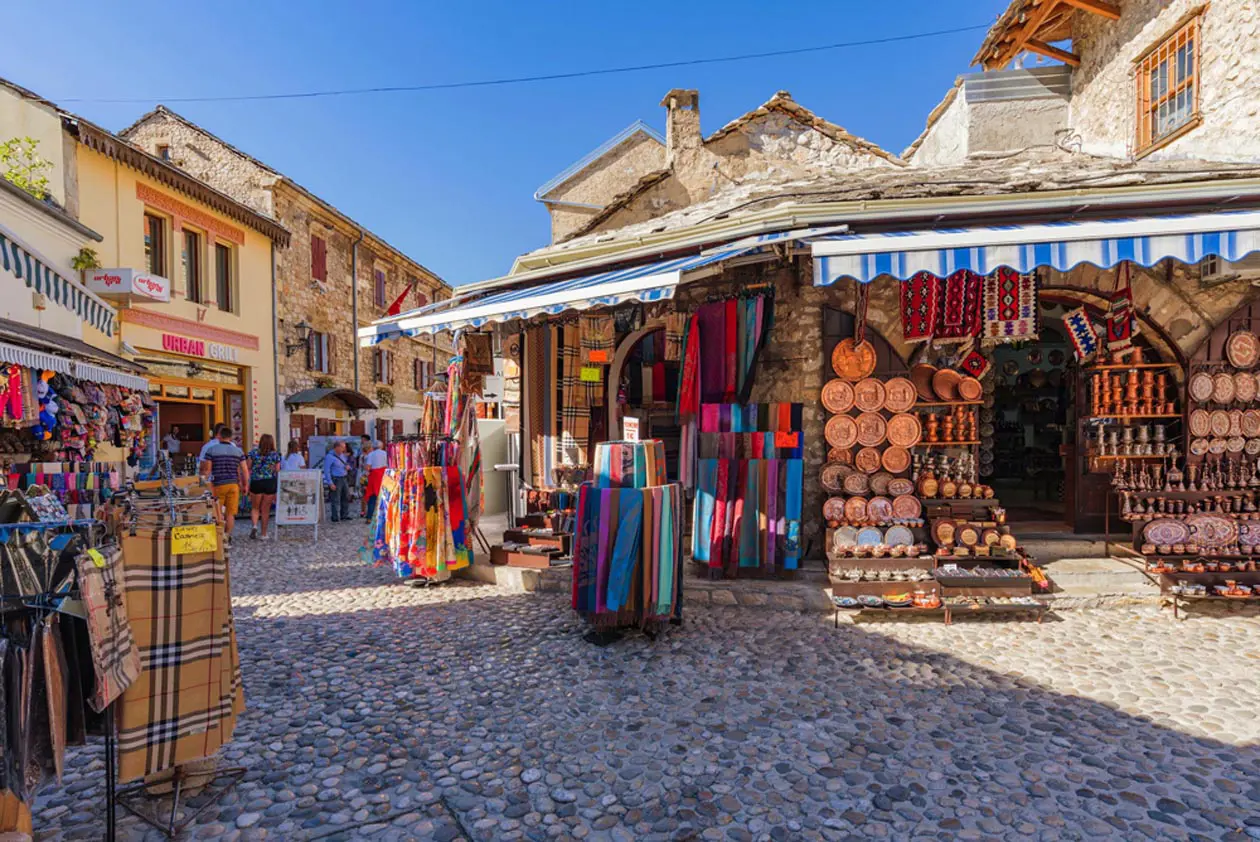
The war’s destruction in 1993—when Croatian forces shelled the bridge, an act later ruled a war crime—left cultural scars, but reconstruction using original techniques symbolized rebirth. Today, bullet-pocked facades in neighborhoods like Bascarsija coexist with restored bazaars, where coppersmiths in Kujundžiluk hammer intricate wares, preserving Ottoman crafts passed down generations. This architectural duality—ancient beauty amid modern repairs—defines Mostar’s cultural identity, drawing visitors to climb minarets for panoramic views and reflect on resilience.
Culinary Traditions: Flavors of Herzegovina’s Melting Pot
Mostar’s cuisine mirrors its multicultural soul, blending Ottoman spices, Balkan meats, and Mediterranean freshness. Central to daily life are ćevapi—grilled minced meat sausages served in lepinja bread with onions, kajmak (clotted cream), and ajvar (roasted pepper relish)—found at spots like Tima-Irma near Stari Most. These street foods trace to Turkish kebabs, adapted with local lamb from Herzegovina hills. Family gatherings feature peka, slow-cooked meat and potatoes under a bell lid with embers, embodying communal feasting.
Wines from nearby Čitluk and Stolac vineyards, like crisp Žilavka whites, pair with prosciutto and smoked cheeses, reflecting Catholic Croat influences. Islamic fasting during Ramadan brings iftar meals of dolma (stuffed vine leaves) and baklava, sweet pastries layered with nuts and honey. Vegetarian options, such as tavče gravče (bean stew) or japrak (stuffed peppers), cater to diverse diets. In 2025, food festivals highlight sustainability, with farm-to-table initiatives using Neretva trout and wild herbs. Dining isn’t just sustenance—it’s a cultural dialogue, where shared platters at riverside terraces foster unity.
Festivals and Traditions: Celebrations of Unity and Bravery
Mostar’s cultural calendar brims with events that bridge ethnic lines. The Stari Most Diving Festival, rooted in Ottoman-era rites of passage, sees locals and pros leaping from the bridge during the Red Bull Cliff Diving World Series in July. This adrenaline tradition, formalized in 1968, symbolizes courage and draws global crowds, with divers collecting tips in a hat—a nod to ancient bridge-jumping for admiration.
Spring festivals like the Mostar Spring Fest feature folk dances, sevdah music—a soulful Bosnian genre blending Turkish, Arabic, and Balkan melodies—and parades in traditional attire. Ramadan and Bajram (Eid) unite Muslims with communal prayers at mosques, open to respectful visitors. Christmas markets in the Catholic quarter add lights and carols, while the Street Arts Festival in summer transforms walls with murals promoting peace, often addressing war themes.
These events, amplified in 2025 with digital AR experiences, emphasize reconciliation. The International Theater Festival spillover from Sarajevo brings performances fusing history and modernity, underscoring Mostar’s role as a cultural crossroads.
Arts and Crafts: Handmade Heritage in the Bazaar
The Kujundžiluk Bazaar, a UNESCO-protected zone, is Mostar’s artistic nerve center. Artisans continue Ottoman trades: silversmiths craft filigree jewelry, potters shape ceramics, and weavers produce scarves with intricate patterns. Copper coffee sets (džezva pots) symbolize Bosnian hospitality, used for thick, bitter coffee served with lokum (Turkish delight) and sugar cubes on a spoon— a ritual pausing time for conversation.
Post-war, street art has surged as therapy, with murals by artists like M-City depicting bridges as metaphors for connection. Galleries in restored konaks showcase contemporary works blending abstract expressionism with war motifs. Music thrives too: Sevdalinka songs, performed on accordion or violin, evoke longing and love, often heard in Old Town cafes. In 2025, initiatives like the Aga Khan Trust support craft workshops, ensuring traditions endure amid tourism.
Daily Life and Multiculturalism: Resilience in Coexistence
Mostar’s culture shines in everyday interactions, where three official languages—Bosnian, Croatian, Serbian—intermingle, and faiths coexist. Mosques call to prayer alongside church bells; synagogues, though few, remind of pre-war Jewish communities. The war divided the city along the “Boulevard of Snipers,” but today, mixed neighborhoods like the Old Town promote integration through shared markets and schools.
Locals embody “mostarski duh” (Mostar spirit)—proud, hospitable, and resilient. Coffee houses buzz with rakija toasts (fruit brandy), storytelling about the siege, and debates on politics, always laced with humor. Women in headscarves shop beside those in modern attire, while youth blend hip-hop with folk dances. Challenges persist—ethnic tensions simmer—but cultural exchanges, like joint heritage projects, foster hope.
Preservation and Modern Influences: Safeguarding the Future
UNESCO’s designation mandates protection of the Old Bridge Area, with management plans conserving archaeological layers from medieval Illyrian times. In 2025, digital tools like VR tours preserve intangible heritage, while eco-initiatives combat climate threats to the Neretva. Global influences—tourism, EU aspirations—infuse modernity: Craft beer breweries mix local hops with international styles, and fusion cuisine emerges.
Yet, authenticity prevails. Initiatives by the World Bank and local NGOs train youth in crafts, ensuring Ottoman techniques survive. Mostar’s culture, thus, evolves without losing its core: a bridge not just of stone, but of stories uniting past wounds with future promise.
In Mostar, culture isn’t static—it’s a living arch, inviting visitors to cross into understanding. From diving rituals to dolma feasts, it celebrates diversity amid adversity, making this city a beacon of Balkan soul.